
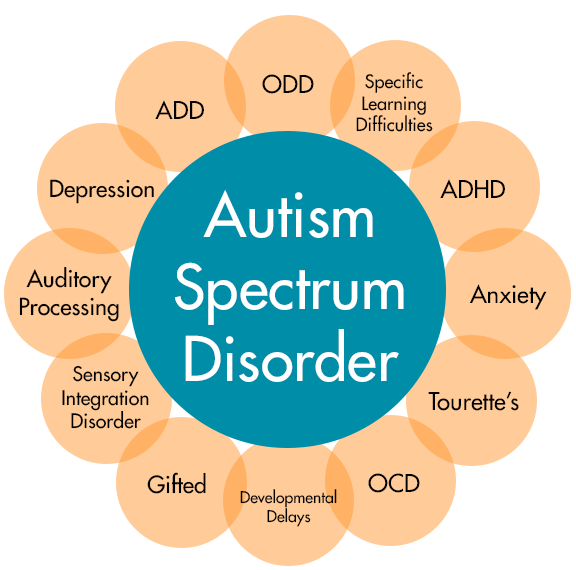
If you’ve ever heard of the term ‘on the spectrum’, you’ve probably heard of autism. Autism Spectrum Disorder (ASD) is a developmental condition that affects people of all ages, with some showing signs as early as 6 months. ASD affects how a person communicates, interacts socially, and experiences the world around them. People with ASD may also show restricted or repetitive patterns of behavior, interests, or activities. The term “spectrum” reflects a wide range of experiences. Some people are mildly affected by their symptoms, while others face more significant challenges in daily life.
Developmental and behavioral pediatricians are skilled at noticing and diagnosing these signs. In some cases, the symptoms may have progressed fast enough to cause full-on disability. At this point, symptoms will have progressed beyond ‘special interests’ or refusal of eye contact. While it might feel like your child or loved one is simply moving at a slower pace than others, this could signal that their development, both socially and psychologically, is stunted.
What many families and individuals don’t realize is just how closely autism and mental health are connected. Recent studies show that approximately 78% of children with autism have at least one co-occurring mental health condition, with anxiety and depression being especially common. Understanding this connection is essential for getting the right support and avoiding years of misdiagnosis or ineffective treatment.
Because developmental disabilities such as autism can overlap with other disorders such as ADHD, OCD, or learning disabilities, the disorder requires a unique approach to be properly cared for. At New Roads Behavioral Health, we recognize that autism doesn’t exist in isolation. Our team has received specialized training in Autism Spectrum Disorder through partnerships with experts like Dr. Julia Connelly, Ph.D. We treat varying levels of Autism Spectrum Disorder, mental health conditions, and co-occurring conditions by providing integrative, personalized care that addresses the unique ways the disorder may appear for each individual seeking care.
If you or someone you love is navigating these challenges, contact us today for a confidential assessment or call 1-888-358-8998 to discuss support options.
And if you find that you need more in-depth care, our facility in Utah is happy to provide consistent autism therapy in combination with your initial autism diagnosis.
Developmental Disabilities: How Are They Defined?
According to the CDC, developmental disabilities are “a group of conditions due to an impairment in physical, learning, language, or behavior areas”.
Most people with autism, whether displaying tells or not, have been autistic since birth. In contrast, mental illness can happen at any time for any reason. Our disability and mental health experts are trained to discern between these differentiators.
People With Developmental Disabilities:
- Develop the issue before age 18 (many are born with developmental disabilities)
- Will be impacted by the disability for their entire lives
- Have core symptoms that cannot be cured or effectively treated with medication
- May have physical, cognitive, and/or behavioral challenges
- Are typically diagnosed by a psychologist or developmental pediatrician
Because there is a natural overlap between the way mental illnesses are diagnosed, some individuals require dual care. Adults with autism are more likely to experience autism and mental health conditions together, as the confusion and shame associated with the disorder can result in a myriad of emotions.
At New Roads, we treat symptoms, disorders, and illnesses as an integrated whole. We treat autism in mental health as a cofactor of the disorder, not an unsightly symptom, offering each individual with autism a personalized approach to mental health and disorder treatment that they can actually identify with.
Other developmental disorders that may coincide with ASD and are treated at New Roads include:
- Cerebral Palsy
- ADHD
- Learning disabilities
While developmental disabilities like autism are lifelong, the right support can make an enormous difference in quality of life, independence, and mental health.
Why Autism Is Considered A Developmental Disability
Autism is categorized as a developmental disability because it influences the way a child or individual reaches key developmental milestones. Sometimes these milestones are physical, such as walking, talking, and reading. However, an autism developmental disability may not manifest until adolescence.
A child or person with autism who struggles to achieve core milestones may turn away socially or struggle to identify with the realities of their peers.
Some struggles in key areas of social development include:
- Communication
- Behavior
- Social Interaction / Relationship Building
- Sensory Processing
- Information Processing
Mental illnesses may impact these things, but they do not happen because of differences in brain development, but rather by circumstance or genetic factors.
Classic Autism Symptoms
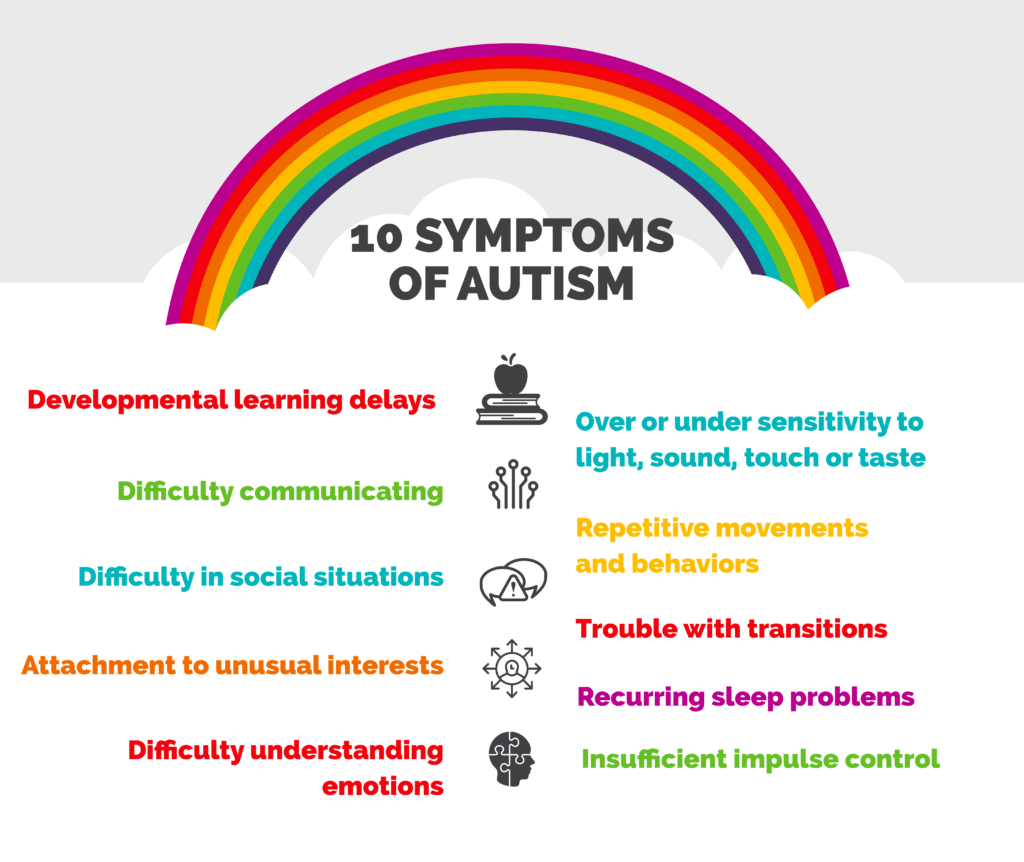
Autism Spectrum Disorder is characterized by differences in several key areas. Understanding these core features helps distinguish autism from mental health conditions, even when symptoms overlap.
Social communication and interaction differences are central to autism. According to the CDC’s diagnostic criteria, this includes challenges with back-and-forth conversation, difficulty understanding or using nonverbal communication like eye contact and facial expressions, trouble developing and maintaining relationships, and differences in understanding social expectations and unwritten rules.
Restricted and repetitive patterns of behavior, interests, or activities are also core to autism. These may include repetitive movements or speech (such as lining up toys or echolalia), insistence on sameness and difficulty with transitions, highly focused or intense interests, and sensory differences, including oversensitivity or undersensitivity to sensory input like sounds, textures, lights, or temperatures.
These features exist on a spectrum, meaning they show up differently in different people and can range from mild to significantly impacting daily functioning. Autism looks different across age, gender, and cultural backgrounds. Women and girls with autism, for example, are often better at masking their autistic traits and may present differently than the stereotypical profile, leading to later diagnosis or misdiagnosis.
Defining Mental Illness
Any mental illness, according to the NIMH, is “a mental, behavioral, or emotional disorder. A mental illness can vary in impact, ranging from no impairment to mild, moderate, and even severe impairment.”
Serious mental illness, according to the NIMH, is defined as “a mental, behavioral, or emotional disorder resulting in serious functional impairment, which substantially interferes with or limits one or more major life activities.”
People With Serious Mental Illnesses:
- May start having symptoms at any time in life
- May have hallucinations and delusions
- Experience disturbances in thinking and perception
- May be effectively treated by medication
- May have temporary or cyclical symptoms
- Are diagnosed by a psychiatrist or other mental health professional
Understanding the distinction between developmental disabilities and mental illnesses helps clarify why autism and mental health conditions require different, yet often complementary, approaches to care. At New Roads, our specialized levels of care for autism and co-occurring mental health needs address both the developmental and mental health aspects of each person’s experience.
At New Roads Behavioral Health, we offer autism therapy in Utah. Our professionals can help diagnose mental illness and treat it with autism therapy and other applicable therapeutic methods.
Additionally, we treat these illnesses as they occur within autism, such as anxiety in autism, depression in autism, and general mental health in autism.
Overlapping Mental Illness Symptoms
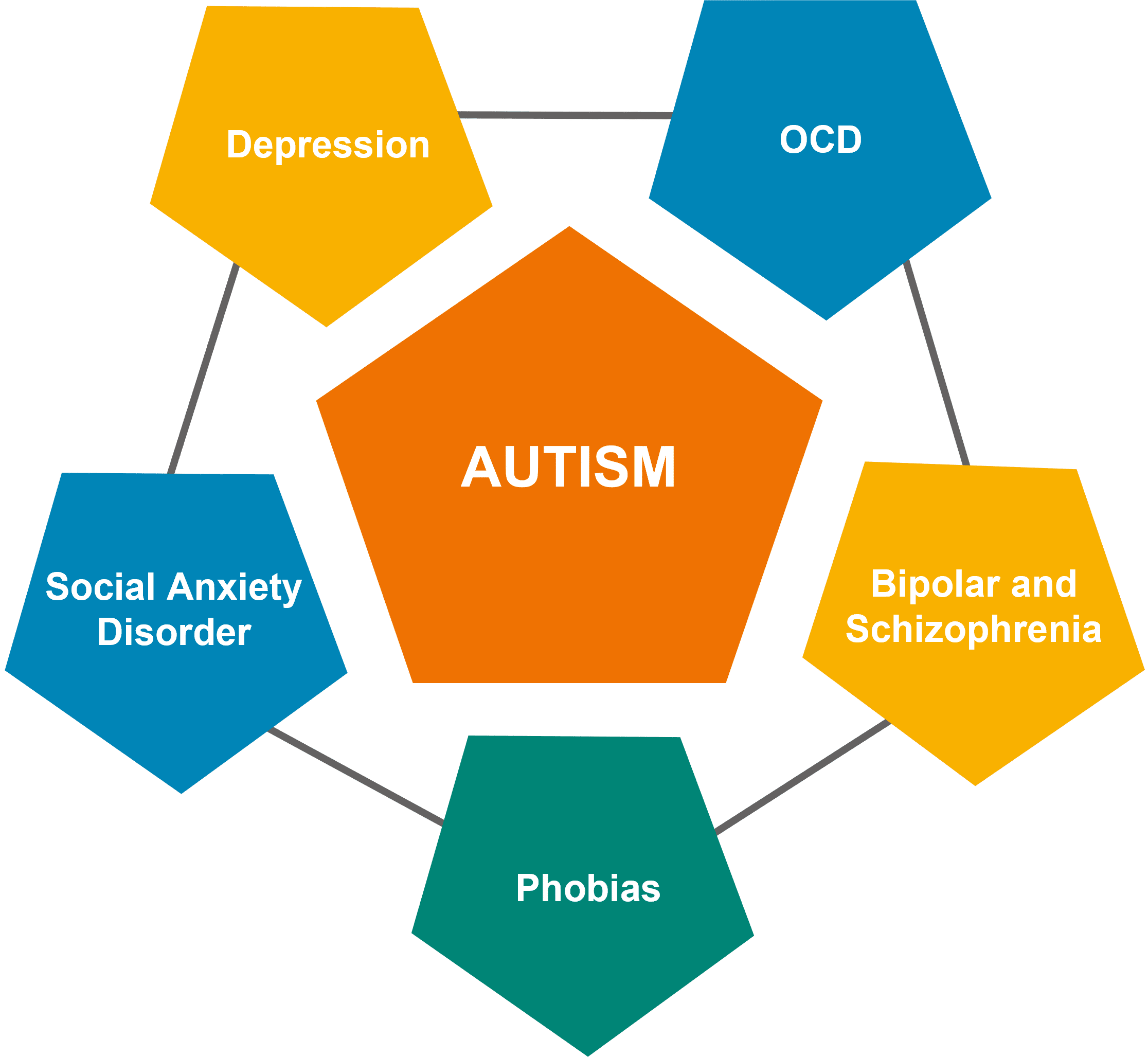
One of the biggest challenges in accurately identifying autism and co-occurring mental health conditions is the significant overlap in how symptoms can appear. Many behaviors can be present in both autism and various mental health conditions.
Anxiety-Related Behaviors
People with autism may focus intensely on particular routines, objects, or phrases. In autism, this behavior is often a tool for managing overwhelming sensory input or reducing anxiety in an unpredictable world. However, the behavior can look nearly identical to the compulsions seen in Obsessive-Compulsive Disorder (OCD).
Studies suggest that 40-50% of individuals with autism experience clinically significant anxiety. The challenge is determining whether the anxiety-related behaviors are part of the autism itself, a separate anxiety disorder, or both. This is where specialized assessment and our integrated dual-diagnosis care become essential.
Social Communication Differences
People with autism may focus intensely on their areas of particular interest, sometimes appearing unaware of others’ thoughts and feelings. In autism, this behavior results from differences in social communication and “theory of mind,” the ability to intuitively understand that others have different perspectives.
This could lead to an autism misdiagnosis, however, since the behavior itself can resemble some of the self-focus seen in personality disorders. The key difference is intent and awareness: individuals with autism often care deeply about others but may struggle to pick up on social cues.
Emotional Regulation Challenges
People with autism often experience meltdowns, which are emotional and sometimes physical responses to overwhelming situations. In autism, meltdowns are almost always the result of sensory overload, anxiety, frustration, communication breakdowns, or a combination of these factors. They are involuntary responses, not manipulative behavior.
In a person who has not been diagnosed with autism, however, these symptoms may be mistaken for Oppositional Defiant Disorder or mood disorders. Understanding the root cause changes everything about how we respond and support the person.
Executive Function and Attention
Challenges with planning, organization, time management, and sustained attention appear in both autism and ADHD. Difficulty with transitions can be present in both conditions as well. Without understanding the full context, these overlapping features can lead to incomplete or inaccurate diagnoses.
Research from 2024 highlights the concept of “transdiagnostic traits,” characteristics that appear across multiple conditions. Executive function challenges, sensory sensitivities, and emotional regulation difficulties can be present in autism, ADHD, anxiety disorders, and trauma-related conditions.
Why and How Does Misdiagnosis Happen?
Autism is not always a person’s first diagnosis, particularly if the person is verbal and of average or above-average intelligence. People who ultimately receive an autism diagnosis often receive a range of other diagnoses first.
Lack Of Autism-Specific Training
Many mental health professionals receive limited training in autism, especially autism in adults, women and girls, or individuals without intellectual disability.
Masking And Camouflaging
Many individuals with autism, particularly women and girls, learn to hide or mask their autistic traits from an early age. This masking can be so effective that autism goes unrecognized, but it comes at a significant mental health cost, often leading to anxiety, depression, and burnout.
Focus On Individual Symptoms Rather Than Patterns
When autism isn’t being considered, clinicians may see each struggle as a separate issue rather than recognizing the pattern that ties them together.
Presence Of Co-Occurring Conditions
When a person has both autism and mental health conditions like anxiety or depression, clinicians may identify and treat the mental health condition without recognizing the underlying autism.
The Impact Of Misdiagnosis
Misdiagnosis matters because it affects treatment:
- Treatments that don’t work or only partially work
- Medications that don’t address the core issues
- Accumulating shame and self-blame
- Missed accommodations and support
- Delayed understanding and self-acceptance
If you’ve been struggling to find effective support or have received multiple diagnoses that never quite seemed to fit, call 1-888-358-8998 to discuss support options with our knowledgeable admissions team.
Other Conditions People With Autism May Have
While many people with autism are initially misdiagnosed, many are also appropriately diagnosed with both autism and one or more co-occurring conditions. Co-occurring conditions are significantly more common among people with autism than in the general population.
ADHD and Developmental Conditions
ADHD and autism co-occur so frequently that some researchers estimate 50-70% of individuals with autism also meet criteria for ADHD. The two conditions share many features, including executive function challenges, difficulty with transitions, sensory sensitivities, and emotional regulation struggles.
People with autism may also have learning disabilities, hyperlexia, speech or language delays, intellectual disability (in some cases), or sensory processing disorder.
Common Co-Occurring Mental Health Conditions
Anxiety disorders affect 40-50% or more of individuals with autism. This can include generalized anxiety disorder, social anxiety disorder, specific phobias, panic disorder, and OCD.
Depression is significantly more common in individuals with autism. Estimates suggest that 20-30% of adults with autism experience depression, compared to about 7% of the general adult population. Depression in autism can present differently, with increased repetitive behaviors, withdrawal from previously enjoyed activities, changes in eating or sleeping patterns, or increased irritability rather than expressed sadness.
Trauma-related conditions: People with autism are at higher risk for experiencing trauma, including bullying, abuse, and medical trauma. Additionally, individuals with autism may be more vulnerable to developing PTSD after traumatic events.
Substance use disorders: While historically considered rare in autism, more recent research suggests they may be more common than previously thought. Some individuals with autism may use substances to self-medicate anxiety, sensory overload, or depression.
At New Roads Behavioral Health, we understand the unique challenges that arise when autism intersects with substance use or other co-occurring conditions. Our evidence-based therapy programs at New Roads include options for people navigating both neurodevelopmental differences and mental health challenges.
Why Are Mental Health Conditions So Common in Autism?
Genetic and neurobiological overlap: There appears to be a genetic link between autism and certain mental health conditions, particularly anxiety, depression, and ADHD.
The lived experience of being autistic in a neurotypical world: Daily life involves navigating a world not designed for how autistic brains work. Constant sensory overload, social misunderstandings, masking, and experiencing rejection can be genuinely anxiety-provoking and depressing.
Difficulty accessing appropriate support: When autism goes undiagnosed or misunderstood, people miss out on accommodations and support strategies that would reduce daily stress.
The good news is that with the right support, including trauma-informed approaches and therapies tailored to how autistic brains work, people can develop effective coping strategies and build meaningful, satisfying lives.
Finding Hope: Support Options for Autism and Mental Health
If you or someone you love is navigating autism and co-occurring mental health challenges, please know: support is available, and recovery and growth are possible.
Effective support for individuals with autism includes:
- Accurate, comprehensive assessment
- Neurodiversity-affirming therapy (such as modified CBT or DBT)
- Sensory accommodations and environmental modifications
- Communication support
- Medication when appropriate for co-occurring conditions
- Family education and support
- Peer support and community connection
For those seeking more information, visit our frequently asked questions about mental health and neurodevelopmental support.
Autism Therapy in Utah | Specialized Treatment At New Roads
At New Roads Behavioral Health, a nonprofit treatment center, our mission is to foster the development of happy individuals by treating our clients as whole and complex people who want to get better. We help them build value-based lives, both as individuals and members of a community.
Our team received specialized Autism Spectrum Disorder training from Dr. Julia Connelly, Ph.D., owner of Spectropolis, formerly The Autism Clinic, in Salt Lake City. We invest heavily in the training of our staff, including over 160 hours of initial training and continuing education credits, to ensure we can meet the unique treatment needs of clients with complex mental health diagnoses, including autism and co-occurring conditions.
Our evidence-based treatment models combine the latest in mental health treatment with a cultivated community atmosphere. We understand that autism isn’t something to be “cured,” and we also recognize that individuals with autism deserve effective, respectful support for very real mental health challenges.
Our Autism-Informed Levels of Care
New Roads Behavioral Health offers multiple levels of care designed to meet people where they are:
Residential treatment provides intensive, around-the-clock support in a structured, therapeutic environment with sensory-friendly accommodations.
Transitional Living helps adults build independence and life skills while still receiving support, particularly valuable for adults with autism who may need additional time developing executive function skills.
Partial Hospitalization (PHP/day treatment) offers structured daily programming while living at home or in supported housing.
Intensive Outpatient (IOP) provides significant support for those who can maintain their daily routines.
General Outpatient (GOP) offers ongoing therapy and skill-building.
Psychiatric Outpatient provides medication management with psychiatrists who understand the unique considerations in prescribing for individuals with autism.
Each level of care can be tailored to support individuals with autism and co-occurring mental health needs. We work with each client to create an individualized treatment plan that respects their neurodevelopmental profile while addressing genuine mental health challenges.
As a preferred in-network provider with most major insurance companies, we strive to make quality autism-informed mental health care accessible and affordable. Meet our experienced team trained in complex diagnoses to learn more about the expertise available at New Roads.
Taking the Next Step
Understanding the connection between autism and mental health is the first step toward getting effective support. Whether you’re a parent or caregiver concerned about an loved one with autism, an adult who suspects you might be autistic, or someone already diagnosed with autism who needs better mental health support, you don’t have to figure this out alone.
We hold hope and the fundamental belief that all clients can recover and grow.
To learn more about our autism-informed mental health services, contact us today for a confidential assessment or call 1-888-358-8998. We’re ready to walk alongside you on the road to recovery and a life worth living.