
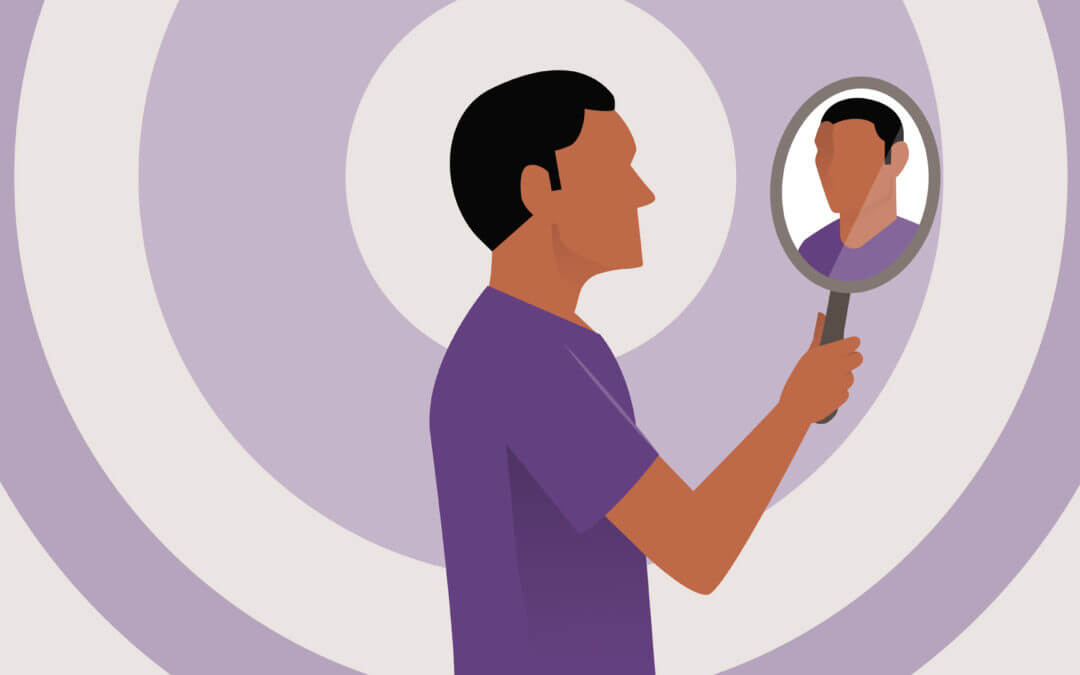
The term “self-awareness” seems self-explanatory. It is just being aware of oneself. But what does that even mean? And why would so many self-help gurus need to preach about the importance of such an obvious concept?
Simple as it may seem, being self-aware is something that many (if not most) of us genuinely struggle with. Yet it’s one of the most powerful tools we have for achieving both self-improvement and self-acceptance. Whether you’re navigating everyday stress, working on your mental health, or recovering from addiction, self-awareness is the foundation of personal growth and fulfilling relationships.
What Is Self-Awareness?
Simply put, self-awareness is the conscious knowledge of one’s own character, feelings, and behaviors. That sounds pretty simple and straightforward. But the truth is, many of us float through our days with little awareness of what we’re doing or why. That’s not necessarily a bad thing, though. Our lives are much easier when we don’t have to think about the little things, like brushing our teeth or driving to work.
The danger arises when we stop noticing some of our more significant behaviors, like how we react to or deal with problems such as stress, conflict, and emotional pain. Our minds are pretty good at forming blueprints for emotional responses, so it doesn’t take long for certain responses to become automatic habits.
Self-awareness means being more mindful of this conditioning, so we can better take back control of our emotional responses (especially those that aren’t serving us and might not be so healthy).
Robyne Hanley-Dafoe, Ed.D., describes how self-awareness is a key part of emotional intelligence. It helps us recognize how our emotions shape our thoughts, behaviors, and relationships. By approaching our inner world with curiosity and compassion, we unlock the strength and clarity needed to navigate life more wisely.
Examples of Self-Awareness in Mental Health and Everyday Life
Being self-aware is the foundation of personal growth, mental health, and recovery. According to author Mark Manson, self-awareness theory can be understood on several different levels. At the surface, it’s simply noticing your actions. At a deeper level, it means recognizing the patterns you’ve developed in your thoughts, emotions, and behaviors and finding strategies to shift them. Doing so helps you respond intentionally rather than react automatically or impulsively.
Awareness of Actions
The first level of self-awareness includes being aware of your actions, and (perhaps more importantly), your distractions. How often do you reach for your phone thinking you’ll scroll for just a few minutes, but by the time you look up, an hour or two has passed?
To distract ourselves from the pain, discomfort, or monotony of everyday life, we often engage in mindless entertainment or passive activities without really being aware of what we’re doing. That’s not to say that all distractions are bad; many of these activities genuinely help us relax and recharge.
The key is not to let your distractions control you.
Choosing to spend 30 minutes on social media is one thing. Reaching for your phone as an automatic response to any uncomfortable feeling is another. The moment you become aware of that compulsion, you’ve already won half the battle.
Awareness of Feelings
Emotional self-awareness is the ability to recognize, understand, and name your own emotional states in real time. You’d think knowing how you feel would come naturally, but just like with our actions, many of us are surprisingly disconnected from our emotions.
We often use distractions to avoid sitting with them. When you remove those distractions, you’ll likely come face to face with feelings you’ve been suppressing: anger, resentment, sadness, or shame. Becoming aware of these emotions matters because it allows you to question their root causes and work toward real solutions.
This is where practicing mindfulness can be extremely helpful. Once you’ve identified a certain feeling, whether it’s anxiety, irritability, grief, sadness, or anger, ask yourself what’s making you feel that way.
Are you really snapping at your wife because she’s chewing too loudly, or is it because you’re feeling anxious about something going on at work? When you can identify the origin of an emotion, it loses some of its power over you.
Once you identify an origin, make a note of it, take a deep breath, and then move on. Next time you experience that feeling, you’ll understand why and it won’t affect you as deeply.
Why Is Self-Awareness Important?
It’s nearly impossible to improve any aspect of your life without first being self-aware. If you don’t have a clear starting point, how can you measure how far you’ve come or how far you still need to go? Perhaps that’s why so many of us cling to those distractions that we examined earlier.
If you stay too busy to acknowledge your weaknesses, you have no reason to confront them and work toward improvement. You can carry on and continue to ignore your deeply rooted issues, fears, and feelings, because hey, you’ve gotten this far and it’s not that terrible yet.
But becoming more self-aware can change that. It allows you to proactively manage your thoughts, emotions, and behaviors rather than allowing them to manage you.
Self-awareness won’t fix all of your problems, but it is a big step toward improvement.
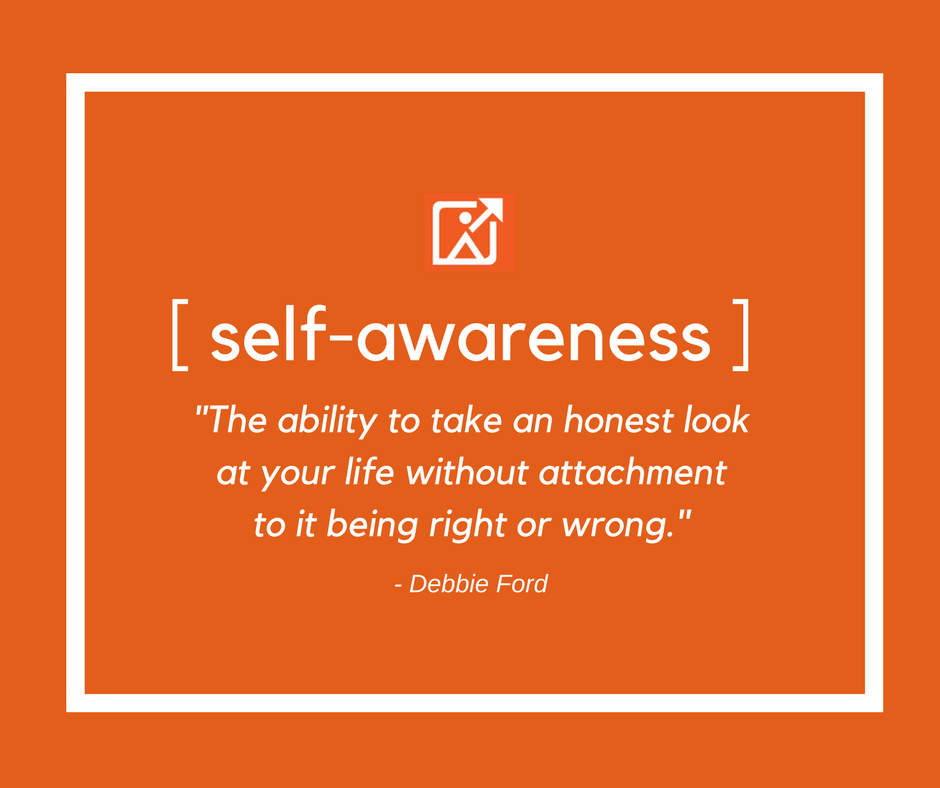
The Benefits of Self-Awareness
Being self-aware creates a ripple effect across nearly every area of life. Here are some of the most significant benefits:
- Better emotional regulation. When you understand your emotional triggers, you respond more thoughtfully instead of reacting impulsively.
- Stronger relationships. Understanding your own feelings and behaviors helps you communicate more clearly and empathize more deeply with others.
- Clearer goal-setting. Knowing your strengths and weaknesses helps you set realistic, meaningful goals and build strategies that actually work for you.
- Improved mental health. Self-awareness is a core component of many therapeutic approaches, helping people identify unhealthy thought patterns and replace them with healthier ones.
- Greater self-acceptance. When you understand yourself without judgment, you’re better able to accept who you are, imperfections and all, and who you’re becoming.
- More intentional living. Rather than drifting through life on autopilot, self-awareness puts you in the driver’s seat of your own decisions.
Self-Awareness in Recovery
For those in recovery from addiction or mental health challenges, self-awareness isn’t just helpful, it’s essential.
Addiction often thrives in the absence of self-awareness. Many people use substances or compulsive behaviors to numb or avoid uncomfortable feelings. Especially feelings they may not even be fully conscious of.
Being self-aware in recovery means learning to recognize your emotional triggers before they lead to destructive choices. It means understanding the situations, people, or internal states that increase your urge to use, and having a plan to respond differently.
Self-awareness also supports the work done in therapy and the other evidence-based behavioral health services at New Roads.
Whether you’re practicing cognitive behavioral therapy (CBT), dialectical behavior therapy (DBT), or working through a 12-step program, self-awareness is the thread that runs through all of it. We know you can’t change patterns you haven’t noticed yet, which is why our therapy programs are all created to build emotional regulation and self-awareness.
Building self-awareness in recovery takes time and practice, but it’s one of the most protective skills you can develop for long-term healing.
If you are more curious about the relationship between mental health struggles and addiction recovery, read through our frequently asked questions about mental health and recovery.
How To Become More Self-Aware
Becoming more self-aware doesn’t happen overnight, but small, consistent practices can make a significant difference.
Here are five simple things you can do every day to improve self-awareness:
- Make Time for Yourself
Setting aside some time for ourselves is something many of us struggle with. Life is so busy, and it may seem selfish to schedule time just for us, so we deprioritize it.
But if you don’t make space to check in with yourself, you won’t be able to show up fully at work, in relationships, or for your own well-being.
Try setting aside 30–60 minutes each day when you can be alone and away from any distractions (especially digital ones). Read, write, meditate, or simply sit quietly. The goal is to get in touch with your own thoughts and feelings without the noise of the outside world.
- Practice Mindfulness
Mindfulness and self-awareness are deeply connected. Mindfulness is a simple type of meditation that requires focusing on the here and now. In practice, you are meant to focus on the present moment by noticing your environment, your breath, and whatever thoughts or feelings arise without judgment.
You’ll notice that certain thoughts and feelings will arise as you try to focus only on your environment and the present moment. You shouldn’t try to block those feelings out. Instead, simply take note of them.
When an anxious thought surfaces, instead of pushing it away, try naming it. For example, if you get an anxious thought about an exam, tell yourself, “I’m feeling anxious about my exam tomorrow” without judging your reactions.
Then gently return your attention to the present. Over time, practicing this exercise will help you to identify your thoughts, feelings, and emotional patterns, and respond to them with more calm and intention.
For added benefits, try practicing mindfulness while enjoying time outside in nature.
- Keep a Journal
Writing is one of the most effective tools for processing thoughts, thinking through problems, and gaining perspective. By keeping a log of your thoughts and feelings, you’ll also be able to track your growth over time.
A daily journal doesn’t need to be elaborate. Try writing a few sentences each day about how you feel in the moment. Document your emotions of fear, joy, frustration, gratitude, and everything else without judgment. Over weeks and months, you’ll begin to notice recurring themes that offer valuable insight into your inner world.
Even just a few sentences about how you’re feeling in a given moment can reveal patterns over time. Recognizing these patterns will help you become more in tune with your thoughts. Plus, you’ll put yourself on a path to greater self-awareness.
- Listen More Intently
Try to be a better listener for friends, family, colleagues, and yourself. This means being fully present and paying attention to the speaker’s words, emotions, and even body language, without making judgments or drifting off into your own world. This also means listening to understand, not merely to respond.
Becoming a better listener is a powerful form of self-awareness. Practice being fully present in conversations: Pay attention to what’s being said, notice the emotions beneath the words, and resist the urge to mentally draft your response while someone else is speaking.
When you learn to truly listen to others, you’ll also become a better listener to your own inner voice.
- Seek Help From Professionals
Sometimes, self-awareness is difficult to develop on your own, and that’s completely okay. A trained therapist, counselor, or mental health professional can offer mindfulness-based support and an outside perspective that’s hard to gain through self-reflection alone. They can help you identify blind spots, uncover deeply rooted emotional patterns, and give you the tools to work through them in a safe, structured environment.
If you’re in recovery from addiction, working with a professional is especially valuable. Look for therapists who are trained in approaches specifically designed to help you build self-awareness, like mindfulness and CBT. These are an essential part of a broader healing plan.
Meet our experienced therapists at New Roads to get support today.
Seeking help isn’t a sign of weakness. It’s one of the most self-aware choices you can make.
Self-Awareness Matters
Becoming self-aware is a starting point for self-improvement. By getting to know your strengths, weaknesses, feelings, and emotions, you can start living actively rather than passively.
You’ll experience better relationships, formulate better strategies for improvement, and find greater peace with yourself.
You can start becoming more self-aware today by practicing with mindfulness exercises, journaling, and scheduling time for yourself routinely.
Frequently Asked Questions About Being Self-Aware
What is the importance of self-awareness?
Being self-aware is the foundation of personal growth. Without it, we can’t recognize our patterns, understand our emotions, or make intentional choices. It’s the starting point for any meaningful change.
What are the signs of self-awareness?
Common signs include:
- Taking responsibility for your actions
- Understanding your emotional triggers
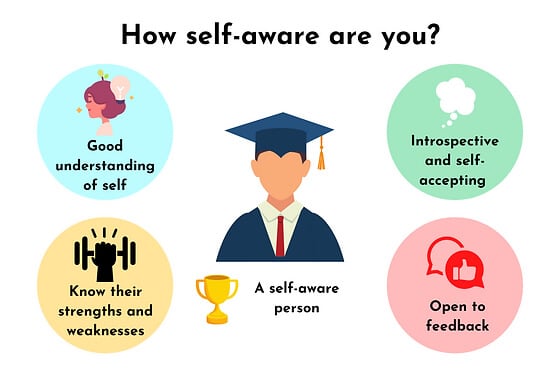
- Being open to feedback
- Recognizing how your behavior affects others
- Being honest with yourself about your strengths and weaknesses
How does self-awareness help with mental health?
Self-awareness helps you identify unhealthy thought patterns, emotional triggers, and behavioral habits before they escalate. It’s a foundational skill in most therapeutic approaches and supports long-term emotional resilience.
Can self-awareness help in addiction recovery?
Yes. Self-awareness is a critical tool in addiction recovery. It helps individuals recognize triggers, understand the emotional roots of addictive behavior, and develop healthier coping strategies in their place.
How long does it take to become more self-aware?
Self-awareness is a lifelong practice, not necessarily a destination. Through consistent effort, mindfulness, journaling, therapy, and honest self-reflection, most people notice meaningful shifts within a few weeks or months.
Being Self-Aware Is Where Growth Begins
Self-awareness won’t solve all of your problems, but it is where every meaningful change begins. By learning to recognize your thoughts, emotions, and behaviors without judgment, you shift from living reactively to living intentionally. You’ll build stronger relationships, make better decisions, and find greater peace with who you are.
Whether you’re just starting your journey or deepening a practice you’ve already built, know that being self-aware is one of the most powerful investments you can make in your mental health, your relationships, and your life.
If you or someone you love is struggling with addiction or mental health challenges, self-awareness is just the beginning. Contact our team at New Roads Behavioral Health to learn more about how we can help.