
Loving someone deeply is never the problem. But when that love starts to feel like an obligation, when their needs consistently come before your own, when their moods dictate yours, and when the thought of stepping back for your own sake fills you with guilt or fear — something deeper may be at play.
Understanding codependency is the first step toward changing this dynamic for good.
What Is Codependency?
Codependency is a learned relational pattern in which one person becomes excessively focused on the needs, feelings, and problems of another — often at the expense of their own well-being. While it can develop in many types of relationships, codependency is especially common in families and romantic partnerships affected by addiction, trauma, neglect, or chronic dysfunction.
In a relationship, codependency happens when each person involved is mentally, emotionally, physically, and/or spiritually reliant on the other. Codependent relationships can exist between romantic partners, family members, and friends.
This type of dependence is common in relationships where one of the parties has an addiction, whether to alcohol or other substances. In fact, it is within the field of chemical dependency that the term codependency was born.
“The term was originally coined in the 1950s, in the context of Alcoholics Anonymous,” explains Dr. Renee Exelbert, a licensed psychologist and author based in New York, “to support partners of individuals who abused substances, and who were entwined in the toxic lives of those they cared for.”
Research consistently shows that family members of people with substance use disorders are at a significantly elevated risk of developing codependent patterns, often as a coping response to chronic stress and unpredictability in the home.
APA Codependency Definition
The American Psychological Association (APA) defines codependency, in part, as “the state of being mutually reliant” and “a dysfunctional relationship pattern in which an individual is psychologically dependent on (or controlled by) a person who has a pathological condition (e.g., alcohol, gambling).”
Codependency is not a clinical diagnosis or formally categorized personality disorder on its own. Rather, it incorporates aspects of attachment style patterns developed in early childhood. Recent studies increasingly link this emotional and behavioral condition to insecure attachment and adverse childhood experiences.
Codependency can also overlap with other conditions, including dependent personality disorder, and is frequently seen alongside anxiety and depression.
Causes of Codependency

What is the root cause of codependency? “[At the foundation], it is due to a poor concept of self and poor boundaries,” says Dr. Mark Mayfield, a licensed professional counselor (LPC), “including an inability to have an opinion or say no.”
Because codependency is widely understood as a learned behavior, its roots are often traced back to early life experiences. Conducted in 1995 through 1997, the CDC-Kaiser Adverse Childhood Experiences (ACE) Study found that children exposed to household dysfunction, including substance use, emotional abuse, or neglect, face significantly higher risks of developing unhealthy relational patterns in adulthood.
When caregiving, people-pleasing, or self-suppression becomes a survival strategy in childhood, it can solidify into codependent behavior over time.
Research suggests that biological, psychological, social, and emotional elements all contribute to codependency:
Biological
The prefrontal cortex of a codependent person’s brain may fail to suppress empathic responses. This creates an overabundance of empathy, making it easier to become enmeshed in another person’s needs and emotions.
Psychological
People who are codependent may be psychologically predisposed to care for others. Insecure attachment styles, particularly anxious attachment, developed in early childhood are increasingly recognized as a contributing factor.
Those who grew up in unpredictable or emotionally unsafe homes may learn to seek security through caretaking, often carrying that pattern into adult relationships. Negative life experiences such as parental conflict, neglect, or emotional abuse can further reinforce these tendencies.
Social
Codependency may also result from broader social conditioning around gender roles, self-sacrifice, and loyalty, as well as increased exposure to substance use within family units. Cultural messages that equate self-neglect with love or devotion can also make codependent patterns harder to recognize and even harder to break.
Emotional
For many people, codependency is sustained by deeply rooted feelings of shame, denial, and low self-worth. A person caught in a codependent pattern may not recognize it as such, instead interpreting their behavior as simply “being a good partner” or “being there for family.”
Shame can make it difficult to acknowledge that a relationship has become unhealthy, while denial serves as a protective mechanism against the pain of that reality.
Codependency can come in all shapes and sizes, with varying severity levels. It can develop across all sorts of relationships, says Dr. Mayfield, including parent-child, partner-partner, spouse-spouse, and even coworker-boss dynamics.
For those navigating a loved one’s addiction or mental health challenges, trauma-informed care can be an important part of untangling these deeply rooted patterns.
Signs of Codependency
Codependency refers to an imbalanced relationship pattern. One person assumes responsibility for meeting another person’s needs, often to the exclusion of acknowledging their own needs or feelings.
Because codependent behavior can feel like love, loyalty, or devotion, it is frequently overlooked or minimized, even by the person experiencing it.
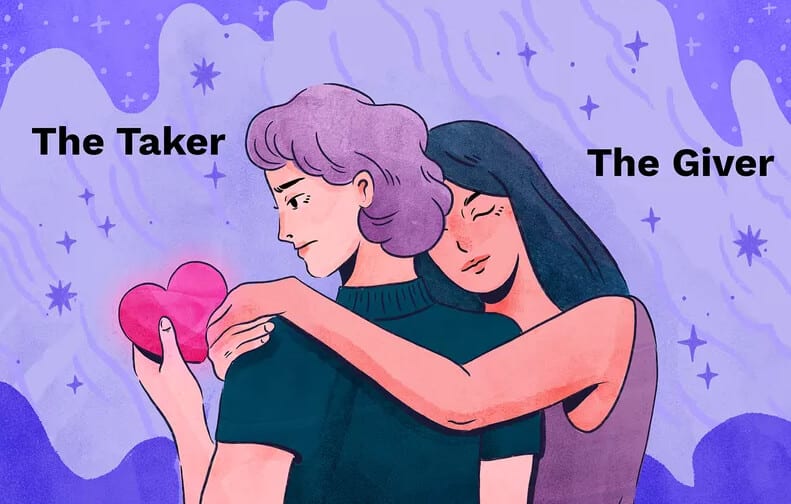
“Codependency is a circular relationship in which one person needs the other person, who in turn, needs to be needed. The codependent person, known as ‘the giver,’ feels worthless unless they are needed by — and making sacrifices for — the enabler, otherwise known as ‘the taker.'” — Dr. Exelbert

Codependent relationships are constructed around an inequity of power that promotes the needs of the taker. This leaves the giver to keep on giving, often at the sacrifice of themselves.
You might be the giver in a codependent relationship if you experience any of the following:
- Having a sense of “walking on eggshells” to avoid conflict with the other person
- Feeling the need to check in with the other person and/or ask permission to do daily tasks
- Often being the one who apologizes, even if you have done nothing wrong
- Feeling sorry for the other person, even when they hurt you
- Regularly trying to change or rescue troubled, addicted, or under-functioning people whose problems go beyond one person’s ability to fix
- Doing anything for the other person, even if it makes you feel uncomfortable
- Putting the other person on a pedestal, even though they don’t merit this position
- A need for other people to like you to feel good about yourself
- Struggling to find any time for yourself, especially if your free time consistently goes to the other person
- Feeling as if you’ve lost a sense of yourself within the relationship
- Difficulty identifying your own emotions, or feeling emotionally numb or confused about what you actually feel
- Feeling responsible for another person’s mood, behavior, or outcomes — and experiencing guilt when things go wrong, even when they are outside your control
| A Note from Our Clinical Team It is also common for people in codependent relationships to engage in enabling behaviors, such as covering up a loved one’s substance use, making excuses for their actions, or absorbing consequences on their behalf, without recognizing these patterns as harmful. Enabling in relationships often feels like protection, but it can prevent the other person from facing the reality of their situation and seeking help. If several of these signs feel familiar, know that recognizing them is not a reason for shame. It’s the first and most important step toward healthier relationships and a stronger sense of self. |
Why Codependent Behavior Is Unhealthy
While everyone has loved ones and feels responsible for them, it becomes unhealthy when your identity is contingent upon someone else.
“Codependency does not refer to all caring behavior or feelings,” says Dr. Exelbert, “but only those that are excessive to an unhealthy degree. Responsibility for relationships with others needs to coexist with responsibility to self.”
Dr. Exelbert goes on to say, “This dynamic has also been referred to as a ‘relationship addiction’ because people with codependency often form relationships that are one-sided, emotionally destructive, and/or abusive.”
In this sense, the inherent issue with codependency is that the giver loses their true sense of self since they’re pouring so much into the taker. Even if the giver doesn’t feel this way immediately, they likely enjoy giving their love and being relied upon.
Over time, this dynamic can develop to unhealthy degrees as the relationship progresses. What begins as devotion can quietly become self-erasure.
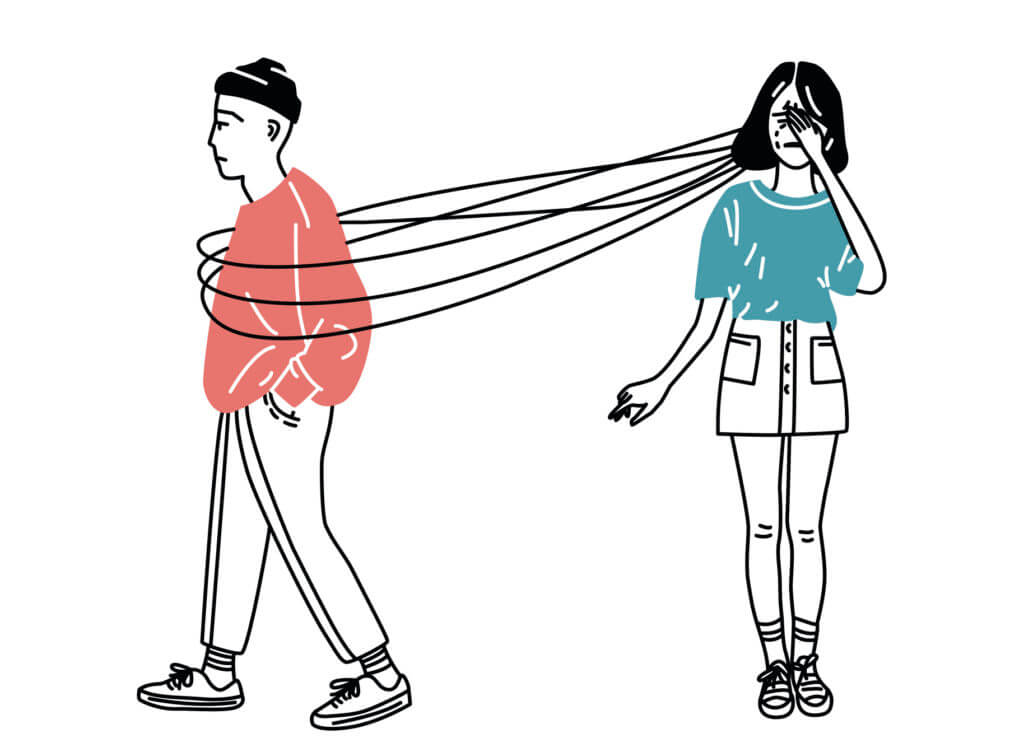
Another issue with codependency is that it becomes difficult for the giver to remove themselves from the relationship. They may feel the other person relies on them so much that leaving — even when they know in their gut it is the right thing to do — feels impossible or selfish. Conversely, the taker can feel so reliant on the giver that they, too, struggle to leave, even when the relationship has become toxic for both parties.
Codependency doesn’t only harm the giver. Enabling behaviors, however well-intentioned, can shield the taker from the natural consequences of their actions.
Without accountability, it’s much harder for takers to recognize the need for change or seek help for underlying issues like addiction or untreated mental health conditions.
In this way, codependency can quietly perpetuate the very problems it seeks to solve.
How to Overcome Codependency
The first step in overcoming codependent tendencies is to focus on self-awareness. This can be done on your own, of course. But Dr. Mayfield also stresses the importance of therapy to help you really unravel your codependent tendencies.
“Many who struggle with codependency don’t seek help until their life begins to fall apart,” says Dr. Mayfield. “My advice is to be proactive and seek help.”
Here are a few tips to consider on your journey towards breaking codependency:
Tip 1: Seek Support from a Mental Health Professional
Breaking codependency is rarely a linear process. It takes time, patience, and often professional support.
At New Roads, our individual and group therapy programs provide a compassionate, evidence-based space to begin that work, with therapists trained in attachment-focused and trauma-informed approaches. You can also meet our experienced therapists to learn more about who would be supporting you on that journey.
If one-on-one therapy doesn’t feel like the right fit right away, consider trying group psychotherapy or a peer support group. There’s even an organization called Codependents Anonymous (CoDa) that specifically addresses “needing to be needed” and past relationship dynamics (a helpful complement to professional treatment).
Tip 2: Let Go of the Need to Fix or Control
One of the most common patterns in codependent relationships is the impulse to manage, direct, or rescue the other person.
While this often comes from a place of genuine care, there is an important distinction between supporting someone and trying to control their outcomes.
Ask yourself honestly: “Am I trying to support this person, or am I trying to fix them?”
Recognizing the difference is harder than it sounds, especially when fixing has felt like love for most of your life. But allowing others to face their own challenges, make their own decisions, and experience their own consequences is not abandonment. It is one of the healthiest things you can do for both of you.
“Stand up for yourself if someone criticizes, undermines, or tries to control you,” says Dr. Exelbert. “By working on building your self-esteem, you’ll find more strength in yourself.”
Tip 3: Reconnect With Your Own Identity
Many people in codependent relationships describe feeling as though they have lost themselves: their interests, opinions, and sense of self gradually absorbed into the needs of the other person. Rebuilding that identity is a central part of recovery.
Start by taking small steps toward some separation in the relationship. Seek activities outside of it and invest in new or neglected friendships. Practice saying “no” to requests that leave you feeling drained or resentful, and resist the guilt that often follows.
“Learn to speak lovingly and positively to yourself,” says Dr. Exelbert, “and resist the impulse to self-criticize.”
Setting and maintaining boundaries in relationships is not selfish. It’s actually an important life skill, and like any skill, it gets easier with practice. Start small, build gradually, and be patient with yourself along the way.
Tip 4: Challenge the Thoughts That Keep You Stuck
Codependency is often sustained by deeply ingrained thought patterns. This can look like, “If I don’t take care of them, everything will fall apart,” or “It’s selfish to put my needs first.” These thoughts can feel like facts, but they are not.
When you notice an anxious or self-critical thought arising, pause and ask yourself: Is there real evidence for this? Am I assuming the worst? Is this situation actually within my control?
Actively turn your attention inward when tempted to worry about someone else’s choices or feelings. This takes practice, so be kind to yourself along the way.
Working with a therapist can be especially helpful here, as cognitive patterns rooted in childhood attachment or trauma often need more than willpower alone to shift.
Tip 5: Build Your Self-Worth From the Inside Out
At the heart of codependency is a fragile sense of self-worth, one that has become dependent on being needed, approved of, or indispensable to someone else. Rebuilding genuine self-worth is what makes all of the above steps sustainable in the long run.
This looks different for everyone, but some meaningful places to start include:
- Investing in relationships that feel balanced and energizing rather than draining
- Setting realistic personal goals that exist outside of any relationship
- Caring for your physical health through rest, movement, and nourishment
- Acknowledging your own strengths rather than filtering them out
- Establishing healthy boundaries in both your personal and professional relationships
Resources for Codependency Recovery
Recovery does not happen in isolation. Alongside professional therapy, the following resources can support your journey to a peaceful life and healthy, mutually supportive relationships:
New Roads Behavioral Health Treatment Center: Find answers to common questions about treatment and recovery at our FAQ page, or contact us to determine if any of our treatment programs align with you or your loved one’s needs.
Codependents Anonymous (CoDa): A free, peer-led support group addressing codependent relationship patterns.
Mental Health America: Offers screening tools, educational resources, and referrals to local support.
Substance Abuse and Mental Health Services Administration (SAMHSA) National Helpline: Free, confidential support for individuals and families facing mental health and substance use challenges.
Get Compassionate Addiction and Codependency Treatment at New Roads

At New Roads, we understand that codependency and addiction rarely exist in isolation. Our evidence-based therapy at New Roads is designed to treat the whole person, addressing not just symptoms, but the deeper relational patterns that drive them.
We also hold hope and the fundamental belief that all clients can get better. If you’re ready to take that first step toward breaking codependent patterns, reach out to our admissions team today.
We understand that privacy matters: Learn about our commitment to confidentiality and HIPAA standards.